Lakewood Lead Paint Removal brings lead paint removal and lead abatement to Steilacoom, WA, inside and out: exterior paint stripping, interior abatement, restoration of lead-painted windows and doors, lead testing ahead of renovation, and encapsulation where stripping would harm original material. In a town this old, choosing the right method for each surface matters as much as removing the lead.
Steilacoom was incorporated in 1854, the first town in Washington Territory to do so, and the 2020–2024 American Community Survey places 57.4% of its homes at 1979 or earlier. Houses inside the Steilacoom Historic District also go through the town’s design review before exterior changes, which shapes how lead work there is scheduled.
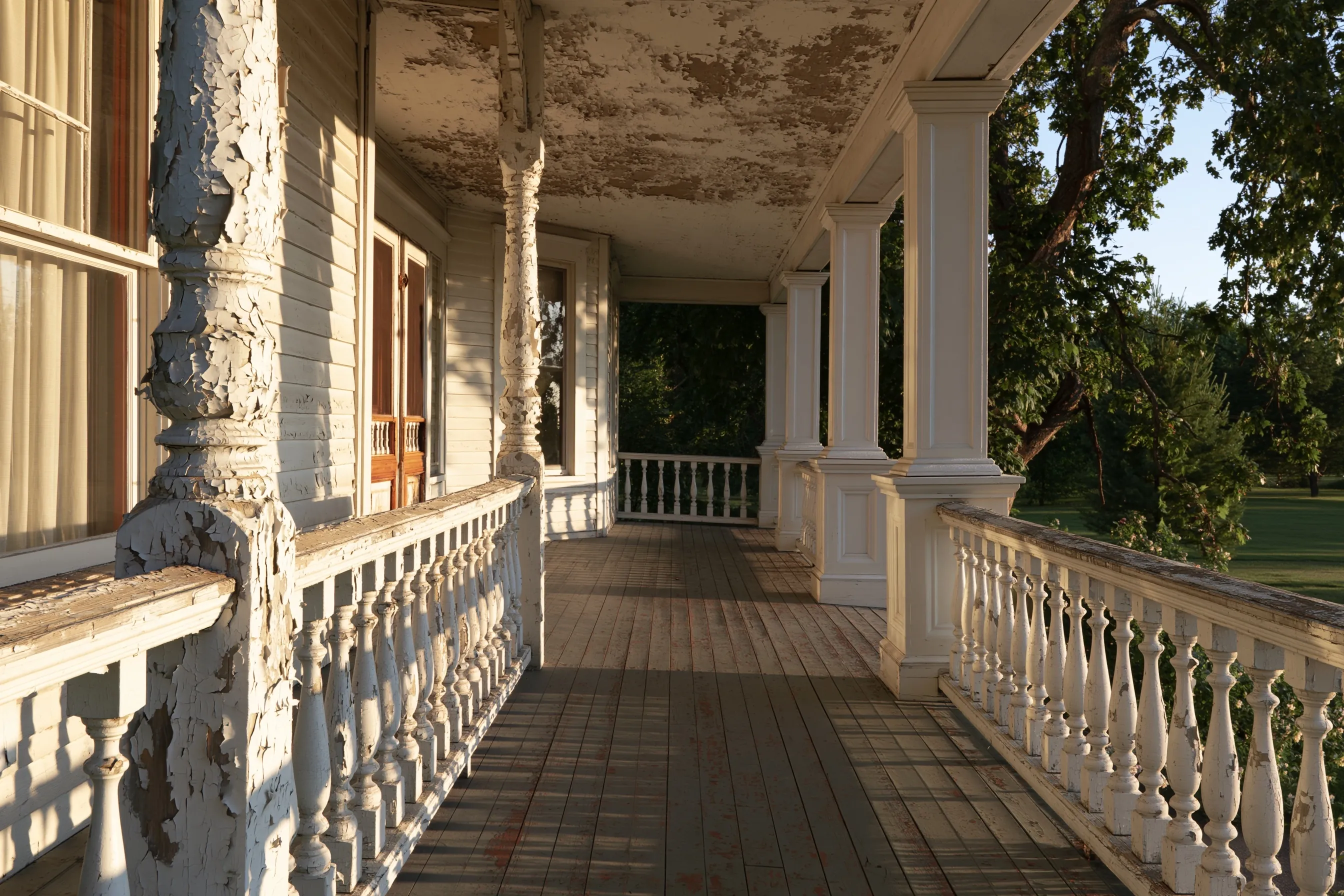
Clapboard, trim and porches on the district’s older houses may carry several layers of paint. Paint removal that keeps the existing boards avoids proposing new siding, one of the exterior changes the town reviews (see the historic district section below). The town’s application does not settle whether paint color alone is reviewed, so ask before choosing. Exterior lead paint removal covers containment and weather planning.
Window and door restoration
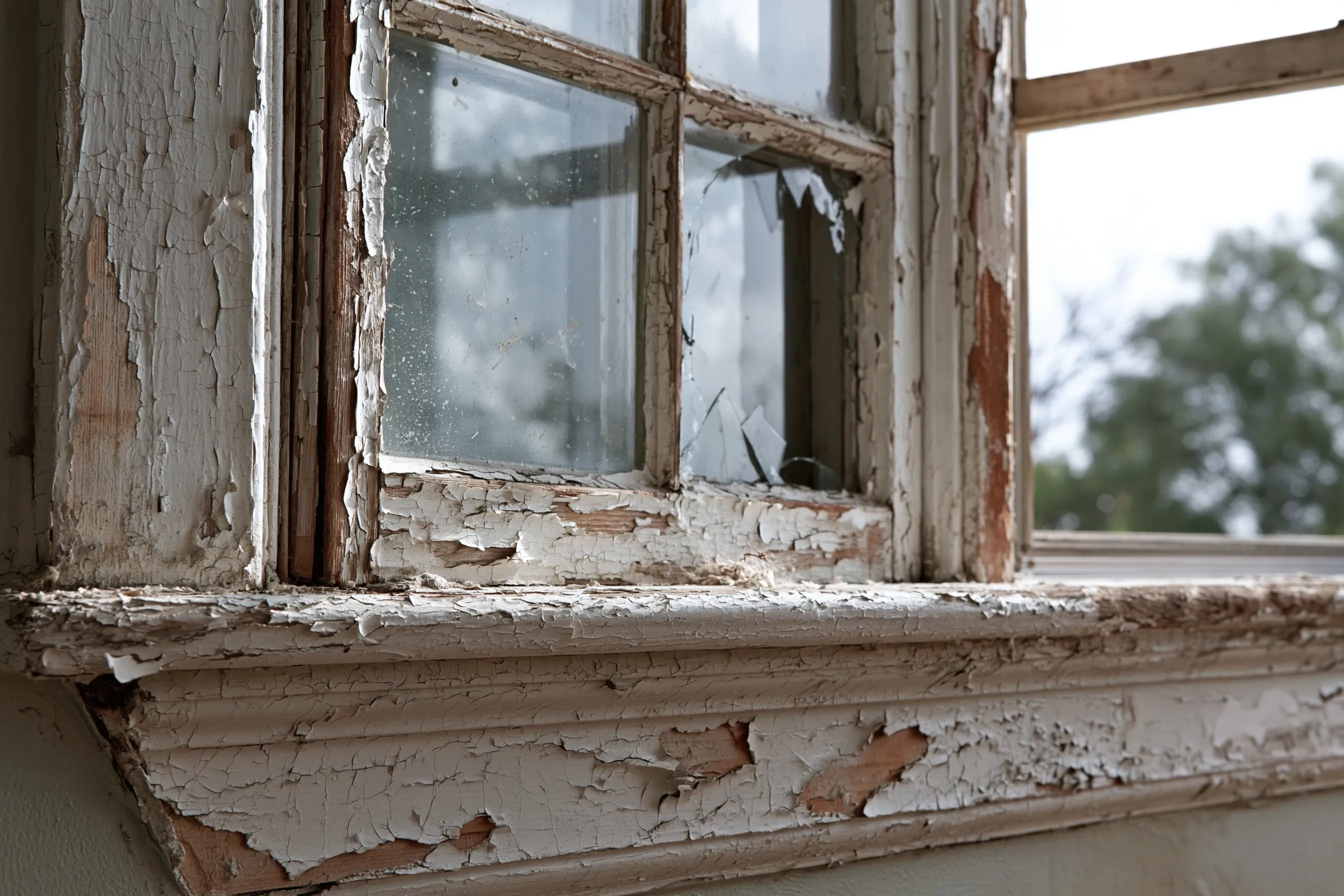
Original wood windows and doors are a large part of a historic house’s character. Stripping and reglazing a sash, or easing a door so it stops scraping, can resolve friction surfaces without losing original material. See lead-painted window and door replacement for both approaches.
Interior abatement
Inside, plaster walls, wide trim and stair balustrades in older homes can hold lead paint under later coats. When hazards need permanent removal, the work is interior lead paint abatement under Department of Commerce rules: a certified firm, notice to Commerce at least five business days ahead, occupants out, and clearance before return.
Testing before renovation
Before a renovation plan goes to design review, it helps to know which components contain lead. A Commerce-certified inspector can test each painted element, and a risk assessor can add dust and soil sampling. Our lead inspection and risk assessment page explains which to choose.
Encapsulation where removal would damage historic fabric
Delicate millwork, plaster with original finishes, or decorative porch elements can suffer from aggressive stripping. Where the paint is still well bonded and the surface is not subject to friction, sealing it in with an encapsulant, or enclosing it, keeps the original material. Read about lead paint encapsulation and enclosure and how to maintain it.
Steilacoom Historic District and lead-safe planning
The Steilacoom Historic District lies between Nisqually Street and Puget Sound. Its National Register documentation spans periods of significance from 1850 to 1924 and names Greek Revival and Late Victorian styles. Steilacoom served as the county seat from 1852 until 1880, when it moved to Tacoma.
The town’s Community Development department reviews new construction and exterior changes to buildings inside the Historic District for compliance with its historic preservation rules. The Preservation and Review Board, which keeps the town’s register of historic places, meets at 6 p.m. on the fourth Wednesday of each month at Town Hall, 1717 Lafayette Street, except in November and December, when special meetings are held as needed. The town’s design review application (revised in 2017) asks for submittals 15 days before the meeting.
For lead work, that schedule comes first. If the plan replaces siding or windows, or restores existing windows and doors, build the review into the timeline before booking containment and crews, and confirm current requirements with the town’s Historic Preservation Officer.
The Tacoma-Pierce County Health Department lists Steilacoom among the communities most affected by arsenic and lead fallout from the former Tacoma smelter. That contamination is in surface soil, separate from any paint on the house, and the department’s Dirt Alert program handles soil questions and testing eligibility.
For exterior paint projects it reinforces careful ground protection: heavy sheeting along every wall being worked, daily collection of chips, and no dry scraping onto bare soil or planting beds. In a damp shoreline setting, plan exterior work for the drier summer months so containment stays intact.
Steilacoom’s housing as a whole is far younger than its 19th-century core. Of roughly 2,900 homes in the ACS estimates, about 860 (29.8%) were built in the 1970s, the largest share of any decade, and 27.7% were built before 1970. Homes from either group may contain lead paint, with the late-1970s houses closest to the 1978 cutoff.
The Preservation and Review Board reviews registered properties and properties within the Historic District, and also commercial, multi-family and duplex structures anywhere in town, so a single-family 1970s house outside the district falls outside its review unless it is on the town’s register. Lead rules do not change at the district line, though: renovation that disturbs paint in a pre-1978 home still needs a Commerce-certified renovator, and rented homes, about 37% of occupied units here, carry the federal disclosure duties at each new lease. Ask the town’s Community Development department which building permits your project needs.
In the district, the order of steps matters more than in an ordinary remodel. Testing comes first, so the design review submittal can say which components contain lead and what will happen to each. The review itself follows, with the application due ahead of the board’s monthly meeting. If the work is abatement, the Commerce notice described above is filed before the start date. Exterior work is then booked for the dry season, and the project closes with clearance and a file of reports for future owners or tenants.
Treating those steps as one plan keeps crews, materials and paperwork in the right order.
Frequently asked questions
Do I need approval before replacing windows in the Steilacoom Historic District?
Likely. The town’s design review application lists window replacement and restoration of existing windows, and the same for doors, among the items its Preservation and Review Board considers for properties in the Historic District. Contact the town’s Historic Preservation Officer to confirm what your project needs before ordering windows.
Can lead paint be removed without changing a historic exterior?
It can be, though no method is right for every surface. Careful paint removal on sound clapboard and trim keeps the original boards; sash restoration keeps original windows; and encapsulation can protect intact, non-friction surfaces without stripping. Badly deteriorated elements may still need repair or replacement, which can require design review.
Does a 1970s Steilacoom house need lead-safe work practices?
If it was built before 1978 and the work will disturb painted surfaces more than 6 square feet per room inside or 20 square feet outside (the federal minor-repair limits), or replaces windows, yes, unless a certified inspector or risk assessor has documented the components as lead-free. Testing first can save a late-1970s house from unnecessary precautions; without that documentation, the rules treat the paint as if it contains lead.
Who certifies lead abatement firms in Washington?
The Washington State Department of Commerce certifies lead abatement firms, supervisors and workers, as well as inspectors and risk assessors. It also certifies renovation firms under the RRP program. Ask for a current Commerce certificate before work begins.
Is lead in Steilacoom soil from paint?
Not necessarily. Steilacoom is on the health department’s list of communities most affected by Tacoma Smelter fallout, which left arsenic and lead in soil. Paint chips can add to lead near a house’s foundation, but the smelter plume is a separate, region-wide issue handled through the Tacoma-Pierce County Health Department.
Is the house inside the Historic District, and has design review started? Let us know, along with the street address, roughly when the house was built, the surfaces you want treated and any lead results. We'll get back to you soon with an estimate or any questions we have. Estimates are free and there's no obligation.