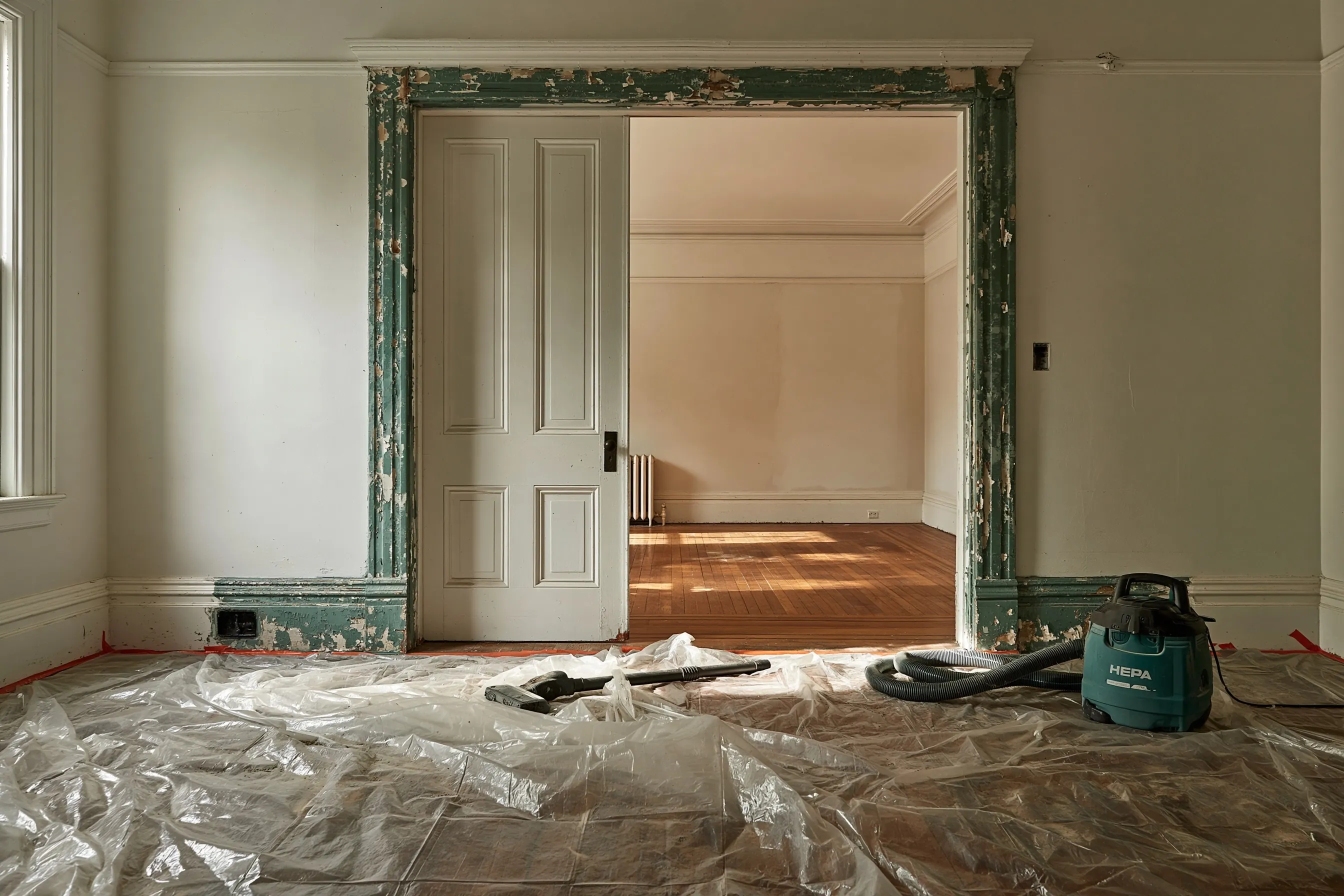
What Washington requires for lead abatement
Washington is an EPA-authorized state, so the Department of Commerce certifies the firms, supervisors and workers who perform abatement, along with the inspectors and risk assessors who evaluate homes. Its abatement certificates run for three years.
- The certified firm notifies Commerce of the abatement, with the notice received at least five business days before work begins; emergency orders and elevated blood lead cases can start sooner.
- Inspections connected to the work must be done by a Commerce-certified inspector or risk assessor, with samples analyzed by an accredited laboratory.
- Owners working in a home they own are exempt, unless someone other than the owner or the owner’s immediate family occupies it while the work is done, or a child living there has an elevated blood lead level.
That exemption is narrow. A home occupied by tenants, or by a child with an elevated blood lead level, follows the full rules even when the owner does the work.
Clearance before you move back in
Abatement ends with clearance: a certified inspector or risk assessor checks the work area visually and takes dust-wipe samples from floors and window sills and troughs. Only when those results pass does the household return. Commerce opened rulemaking in May 2026 to update chapter 365-230 WAC, including outdated dust clearance standards, so ask the evaluator which standard they are applying.
Before abatement, a lead inspection and risk assessment shows which surfaces need it. Owners of rented units can read about rental property lead hazard control.